Moné's Story: Building a Budget (and a Fresh Start)
Moné heard about the Building Wealth and Health Network through the City of Richmond and came in carrying a lot: caregiving responsibilities for her mother, raising her 9-year-old, and the everyday demands of work and family. She was looking for something practical—but also something that felt human.
The class delivered both. The small group setting made it easier to connect, and the support built into the program removed common barriers. “[The group] was digestible and relatable,” Moné shared. “It made you want to apply it—and the way it was broken down made it feel attainable.” Needs like dinner and childcare support removed barriers that often keep people from showing up consistently.
She arrived with clear goals and a desire to build stability. One immediate goal—saving enough to get her car back—became achievable through budgeting and intentional planning. The course also helped shift everyday habits. What once felt like impulse spending became a moment to pause and decide. “Now I check prices and recheck myself—‘Do I need it?’” she said. “Putting it back feels empowering.”
Moné originally set a goal of saving $10,000 in a year. Life had other plans—but the progress was still powerful. “I did not reach my goal of $10,000 in a year, but I was able to save around $3,200, which was still a great success in my book,” she said. “We had numerous unaccounted-for needs to be met. With me saving and budgeting, I was able to save and have a reserve to handle those encounters.”
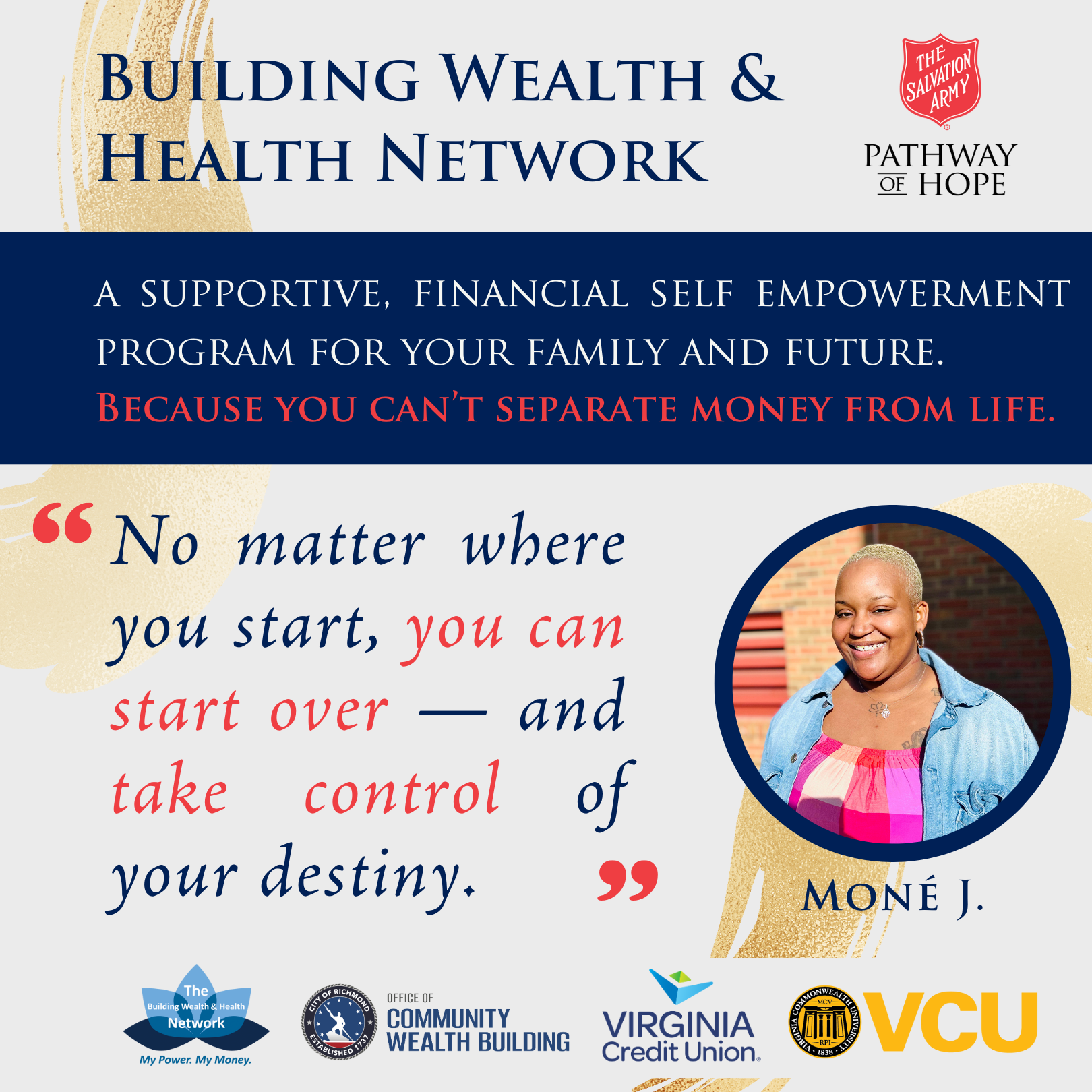
That’s what financial empowerment can look like in real life: not just reaching a number, but also building the ability to respond to the unexpected without losing momentum. For Moné, the program reinforced something she now carries forward: “No matter where you start, you can start over—and take control of your destiny.”
Time with her daughter became part of the budgeting process, too. Intention matters — especially when money decisions connect to family memories and stability. Planning for shared experiences (like a drive-in movie night) fits into a budget that supports both joy and responsibility.
Perhaps the biggest shift was emotional. Previous financial courses hadn’t fully clicked — either the information felt overwhelming or disconnected from real life. This course felt attainable, building comfort alongside skills. It also opened space for healing around shame, uncertainty, and the feeling of being “behind.” The takeaway is simple and powerful: starting over is allowed, as many times as it takes. Help exists. Direction exists. Progress follows when the heart is open — and the work is done.