
Finding Hope and Home: Tiffany’s Journey
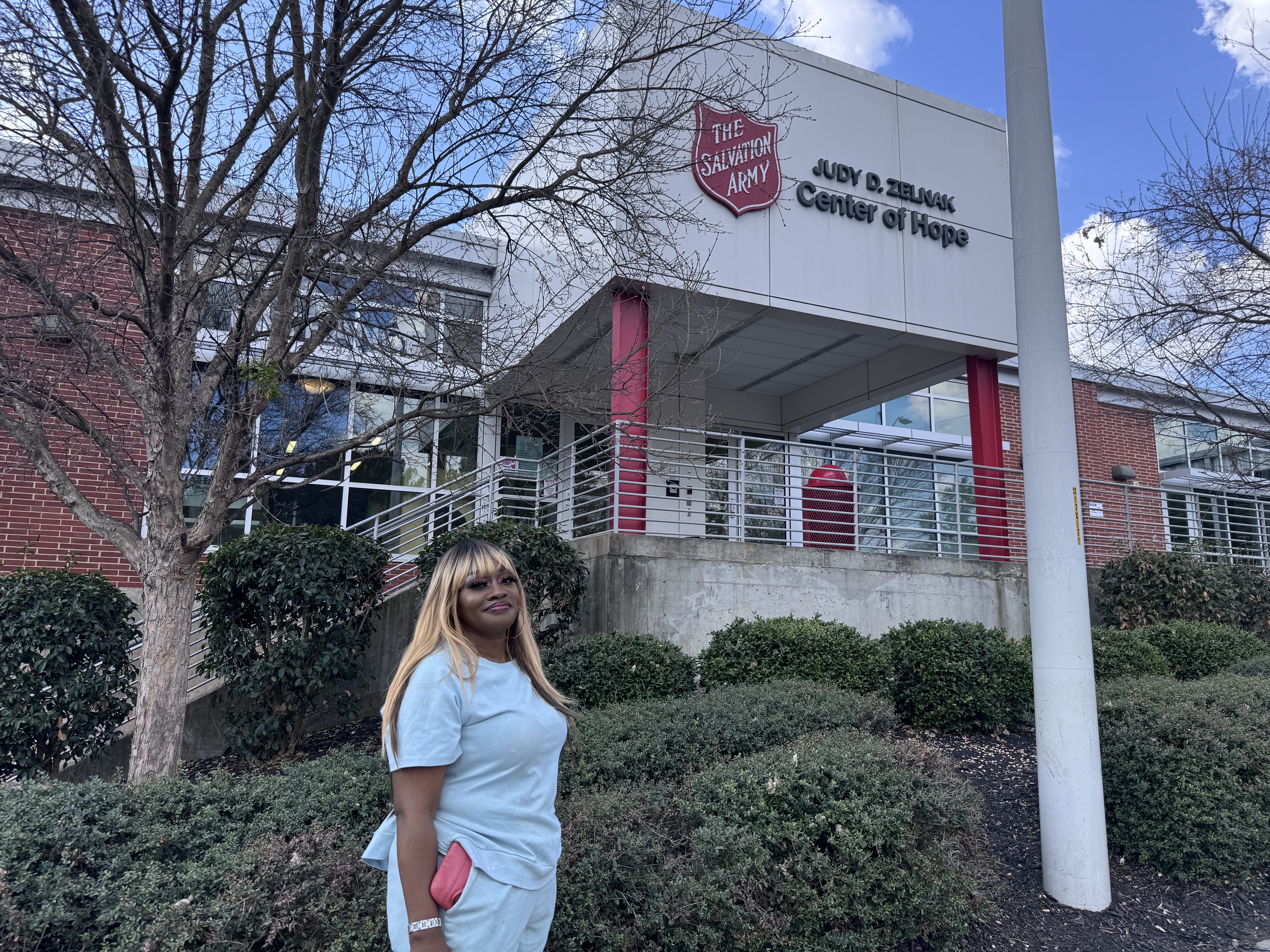
When Tiffany Missouri first arrived at The Salvation Army of Wake County’s Center of Hope shelter, she was facing one of the most difficult moments of her life. With little notice, she lost her home. Caring for her infant son, she was overwhelmed by fear and uncertainty.
“I had to move out of my place last minute,” Tiffany recalls. “I had nowhere to go. It was a scary time for me.”
For Tiffany, the biggest fear wasn’t just the unknown, it was keeping her child safe.
“To be secure with a roof over your head, somewhere to safely sleep, that was my biggest worry.”
Finding Stability
Tiffany stayed at the Center of Hope for several months while she worked to rebuild her life. During that time, the structure and support of the program helped her begin to focus on next steps.
“At first, I didn’t know what the next step was—if I could find a place, if I could trust anyone, if I could find employment. You just feel lost,” she says. “But this place really puts you in focus.”
Tiffany’s journey was guided by the social services team, including case management specialist Jeanette Barner who continued working with Tiffany after she transitioned to her new apartment to help ensure long-term stability.
“I remember Tiffany very well. She was not doing well when she first came to the shelter,” Jeanette recalls.
Jeanette believes for many residents, being in the shelter program reinforces the importance of structure and routine as key building blocks for success. Even small habits, like keeping a room clean, can help restore a sense of stability.
“Once a client learns how to make a bed or maintain their suite, it sets a tone,” she says. “It helps them see clearly and focus on goals like employment and housing.”
“It was tough love,” admits Tiffany. “It was time to get things together in my life and to learn different values and learn community.”
As someone who describes herself as fiercely independent, Tiffany admits learning to lean on others wasn’t easy.
“I’m a New Yorker,” she says with a smile. “Community didn’t come naturally to me at first.”
Advocacy When It Mattered Most
One of the most meaningful parts of Tiffany’s experience was the relationship she built with her case manager, Frank Baldiga.
“He was an awesome social worker,” Tiffany says. “I could be transparent with him, and he would tell me what I needed to do.”
At a time when Tiffany felt extremely vulnerable with no power, no money, and limited resources, having someone advocate for her made all the difference.
“Frank even spoke with my landlord during a home visit,” she recalls. “It was the first time I really felt like someone was advocating for me. I will never forget that.”
Beyond guidance, the Center of Hope team helped Tiffany navigate housing opportunities, job leads, and other resources.
“Frank even went to the warehouse and found a car seat for my son so he could be safe while I went to look at apartments.”
A New Chapter
Two years after leaving the shelter, Tiffany and her son are thriving.
“Since I left here, I’ve lived in two different places,” she says. “I was able to maintain housing and then move somewhere even better.”
She is especially grateful that her son, who has special needs, is receiving the support he requires.
“My son is in school now and gets all the therapies he needs,” Tiffany says proudly. “And he can walk now. Everyone cheered him on when that happened.”
For Tiffany, stable housing was the foundation for everything that followed.
“When you have no housing and you finally get it—that’s where reclaiming your life starts,” she says. “Housing is the foundation.”
A Community That Continues to Care
Even after residents leave the shelter, the Center of Hope continues to support families through aftercare services. Case managers check in to help ensure families are maintaining housing, managing expenses, and accessing resources like food and clothing when needed.
Jeanette says that continued connection can make a meaningful difference.
“Sometimes people just need someone to give them a soft reminder,” she says. “We all need that from time to time. Life is not easy and for some it can be especially hard. Having someone to call and check in really does make a difference. I am very grateful to be that person.”
Tiffany remains connected to the Center of Hope. She occasionally returns for assistance through the food pantry and often refers others who need help. Looking back, she acknowledges the journey wasn’t always easy, but it changed her life.
“As hard as it was, the rewards were better,” she says. “I learned about community. I learned how to refocus.”
Now, Tiffany and her son are building a stable future together, something she once feared might never happen.
“When I had nowhere to go,” she says, “The Salvation Army was there.”